What Is Forex Trading? A Beginner's Guide to the World's Largest Financial Market
Every day, trillions of dollars move across the global financial system. Businesses pay international suppliers, tourists exchange money before traveling, governments manage foreign reserves, and investors seek opportunities in currency markets.
Behind all of these transactions is one of the largest and most active financial markets in the world, the Foreign Exchange Market, more commonly known as the Forex Market.
If you've ever wondered what Forex trading is, how it works, or why millions of people around the world participate in it, you're in the right place.
Whether you're completely new to investing or simply curious about currency trading, this guide will help you understand the fundamentals of Forex in a simple and practical way.
What Is Forex Trading?
Forex, short for Foreign Exchange, is the process of exchanging one currency for another.
Unlike buying products or services, Forex trading focuses on the value of one country's currency relative to another.
For example:
Converting Philippine Pesos (PHP) into US Dollars (USD)
Exchanging Euros (EUR) into Japanese Yen (JPY)
Trading British Pounds (GBP) against the Australian Dollar (AUD)
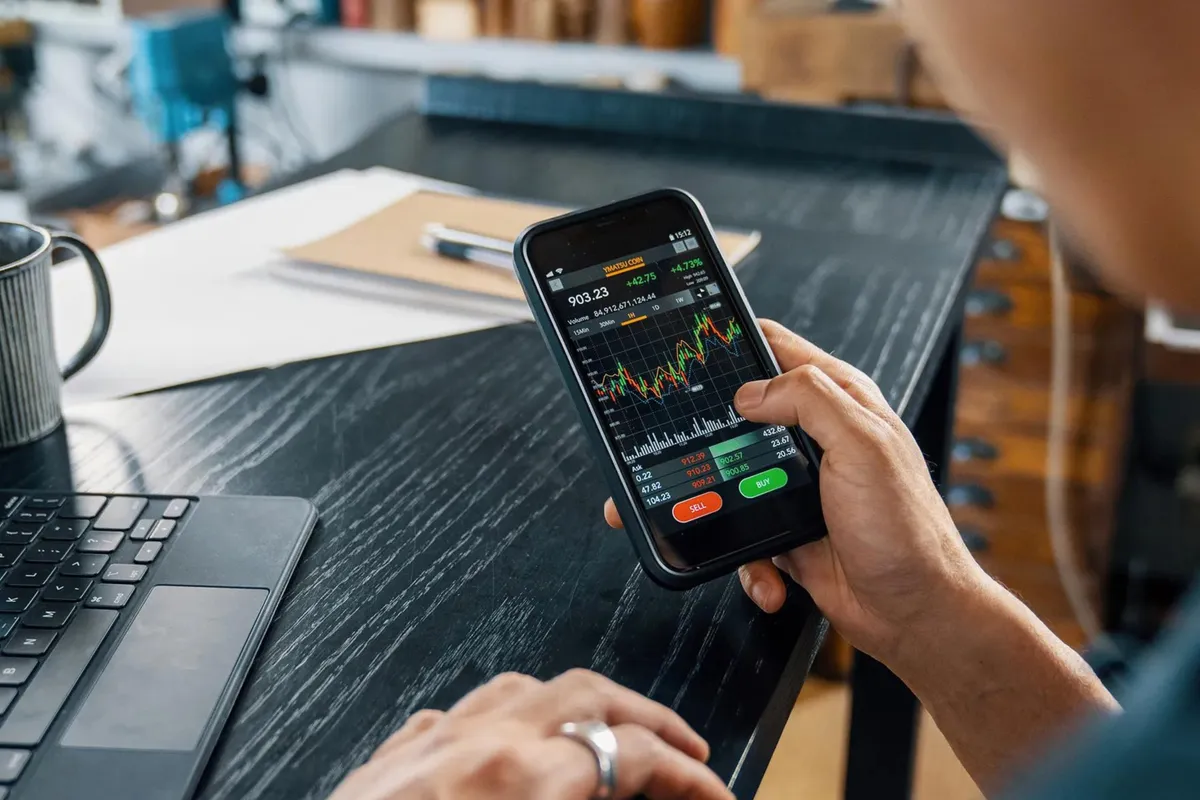
Currencies are always traded in pairs, because every transaction involves buying one currency while simultaneously selling another.
The objective of Forex trading is to participate in price movements between these currency pairs. Some people trade to hedge currency exposure, while others participate for investment or speculative purposes.
Why Is Forex Called the Largest Financial Market?
The Forex market is often described as the world's largest financial market because of its enormous daily trading volume.
Unlike stock exchanges that operate within a specific country, Forex is a decentralized global marketplace connecting banks, financial institutions, corporations, governments, and individual traders around the world.
This global participation contributes to:
High market liquidity
Continuous price movement
Broad participation across different time zones
Because the market operates internationally, activity continues almost around the clock during the trading week.

Why Do Currencies Change in Value?
Just like any product or service, currencies are influenced by supply and demand.
If demand for a currency increases relative to another, its value may rise. If demand decreases, its value may fall.
Many factors can influence currency values, including:
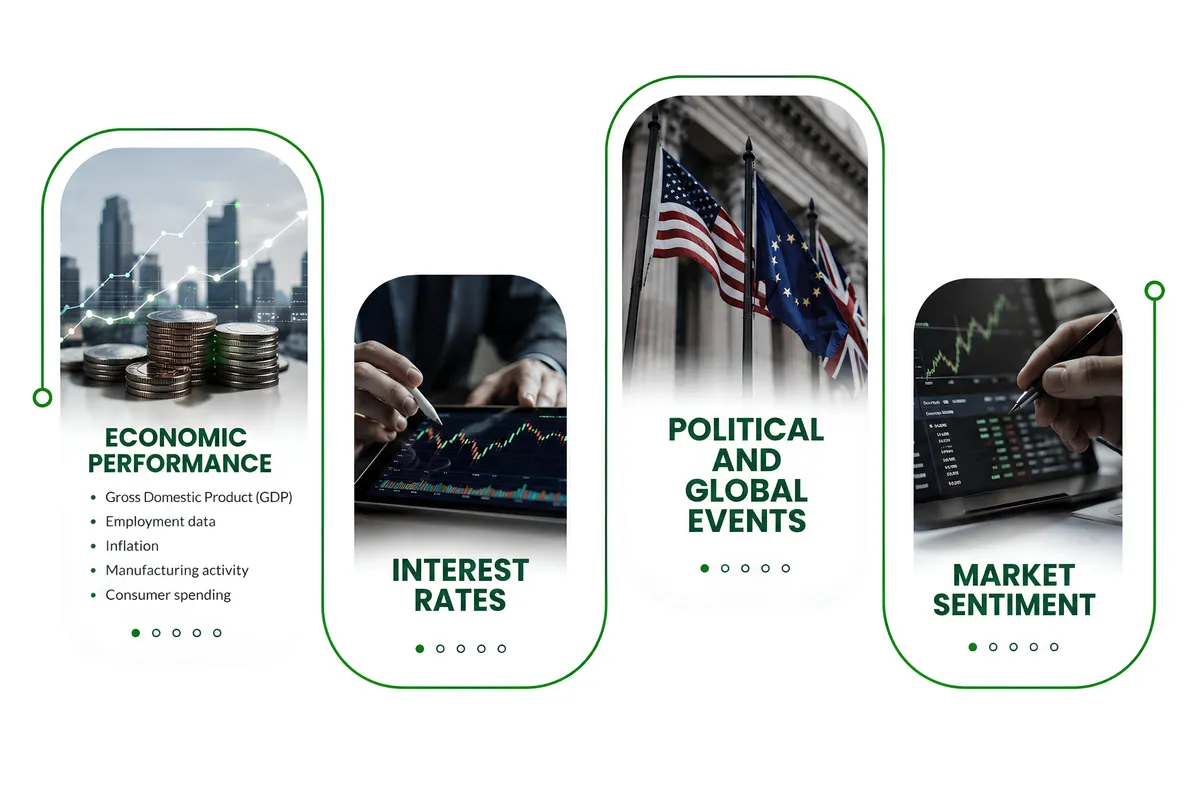
Economic Performance
Countries with strong economic growth often attract investment, which can increase demand for their currency.
Indicators commonly monitored include:
Gross Domestic Product (GDP)
Employment data
Inflation
Manufacturing activity
Consumer spending
Interest Rates
Central banks influence borrowing costs by adjusting interest rates.
Higher interest rates may attract investors seeking potentially higher returns on assets denominated in that currency, while lower rates may have the opposite effect.
Political and Global Events
Political developments, elections, international trade policies, and geopolitical events can all influence market sentiment.
Unexpected news often creates increased market volatility as participants react to new information.
Market Sentiment
Sometimes prices move because of expectations rather than confirmed events.
If investors believe a country's economy will strengthen in the future, they may increase demand for its currency before economic reports are officially released.
Understanding Currency Pairs
Currencies are quoted in pairs because one currency is always compared against another.
For example:
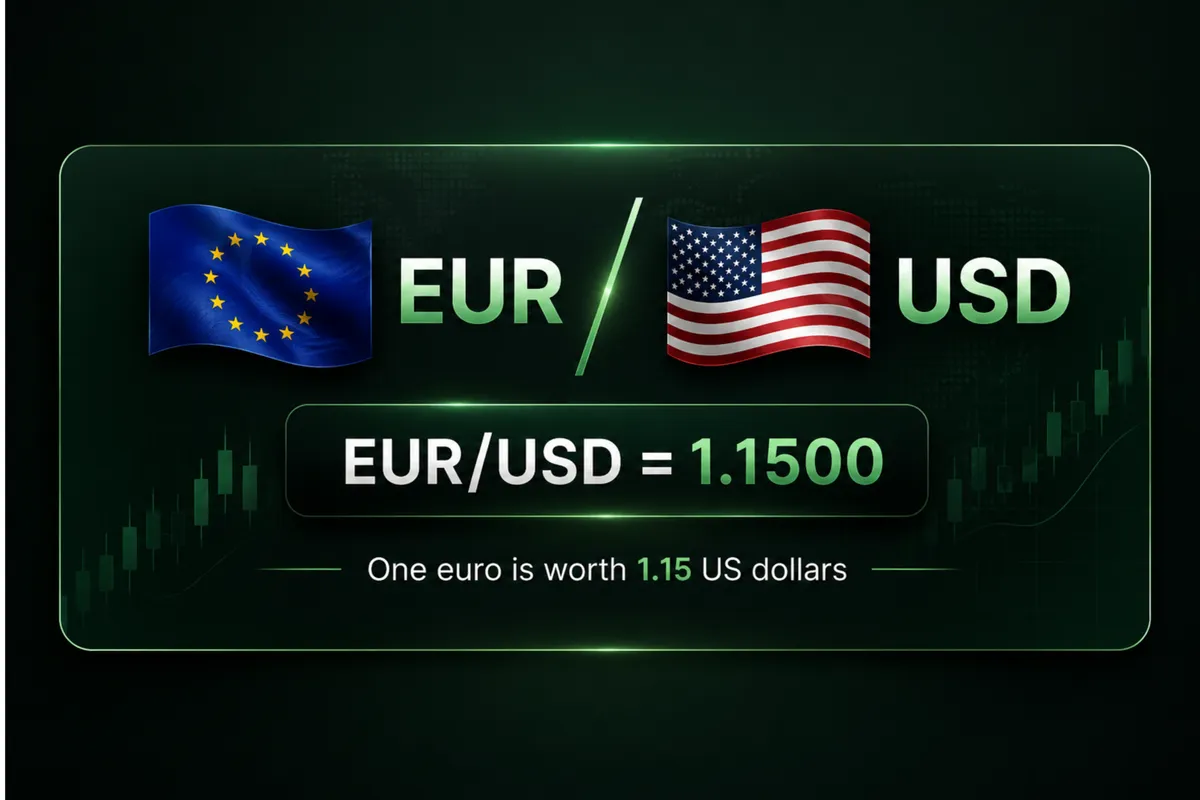
EUR/USD
This simply means:
EUR = Euro
USD = United States Dollar
If the exchange rate is: EUR/USD = 1.1500
It means one Euro is worth 1.15 US Dollars.
When traders believe the Euro may strengthen relative to the US Dollar, they may consider buying the pair.
If they believe the Euro may weaken, they may consider selling the pair.
Remember that market prices are influenced by many factors, and no outcome is guaranteed.
Types of Currency Pairs
Currency pairs are generally grouped into three categories.
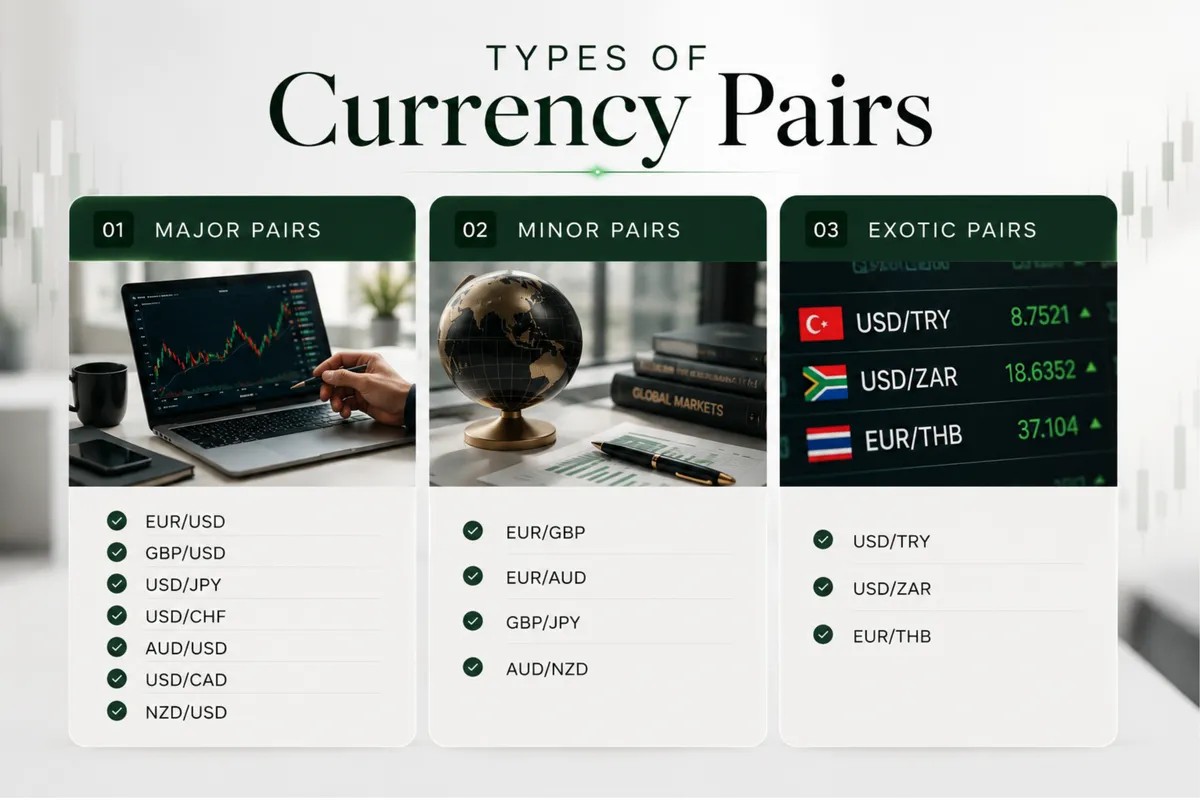
Major Pairs
These are the most actively traded currency pairs in the world.
Examples include:
EUR/USD
GBP/USD
USD/JPY
USD/CHF
AUD/USD
USD/CAD
NZD/USD
Major pairs generally have higher trading activity and tighter spreads because of their liquidity.
Minor Pairs
Minor pairs do not include the US Dollar but still involve major global currencies.
Examples include:
EUR/GBP
EUR/AUD
GBP/JPY
AUD/NZD
Exotic Pairs
Exotic pairs combine a major currency with the currency of a developing or emerging economy.
Examples include:
USD/TRY
USD/ZAR
EUR/THB
These pairs may experience wider spreads and greater price fluctuations because they are generally traded less frequently than major pairs.
Who Participates in the Forex Market?
Many people assume Forex trading is only for professional traders.
In reality, the market includes a wide variety of participants.
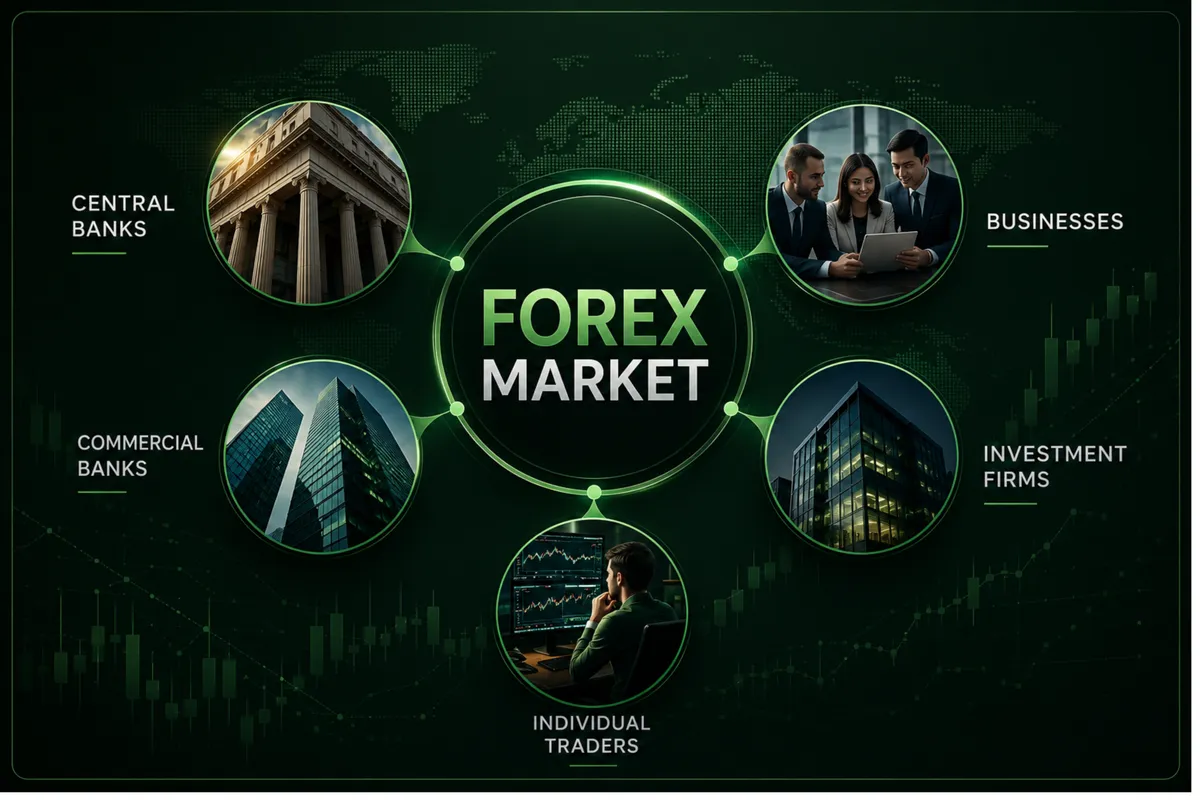
Central Banks
Central banks help manage monetary policy and influence currency stability through decisions such as adjusting interest rates.
Commercial Banks
Banks facilitate international transactions for businesses, governments, and clients while also participating in currency markets.
Businesses
Companies exchanging goods and services internationally often convert currencies to support global operations.
Investment Firms
Institutional investors may buy or sell currencies as part of broader investment strategies.
Individual Traders
Retail traders participate through licensed brokers, using trading platforms to analyze and place trades based on their own strategies.
When Is the Forex Market Open?
One of the unique features of Forex is that it operates nearly 24 hours a day during the business week.
Trading activity follows the opening and closing of major financial centers around the world.
The four primary trading sessions include:
Sydney
Tokyo
London
New York
As one session closes, another begins, allowing continuous market activity from Monday through Friday.
This flexibility enables participants from different countries and time zones to access the market.
What Makes Forex Different from Other Markets?
Forex has several characteristics that distinguish it from other financial markets.
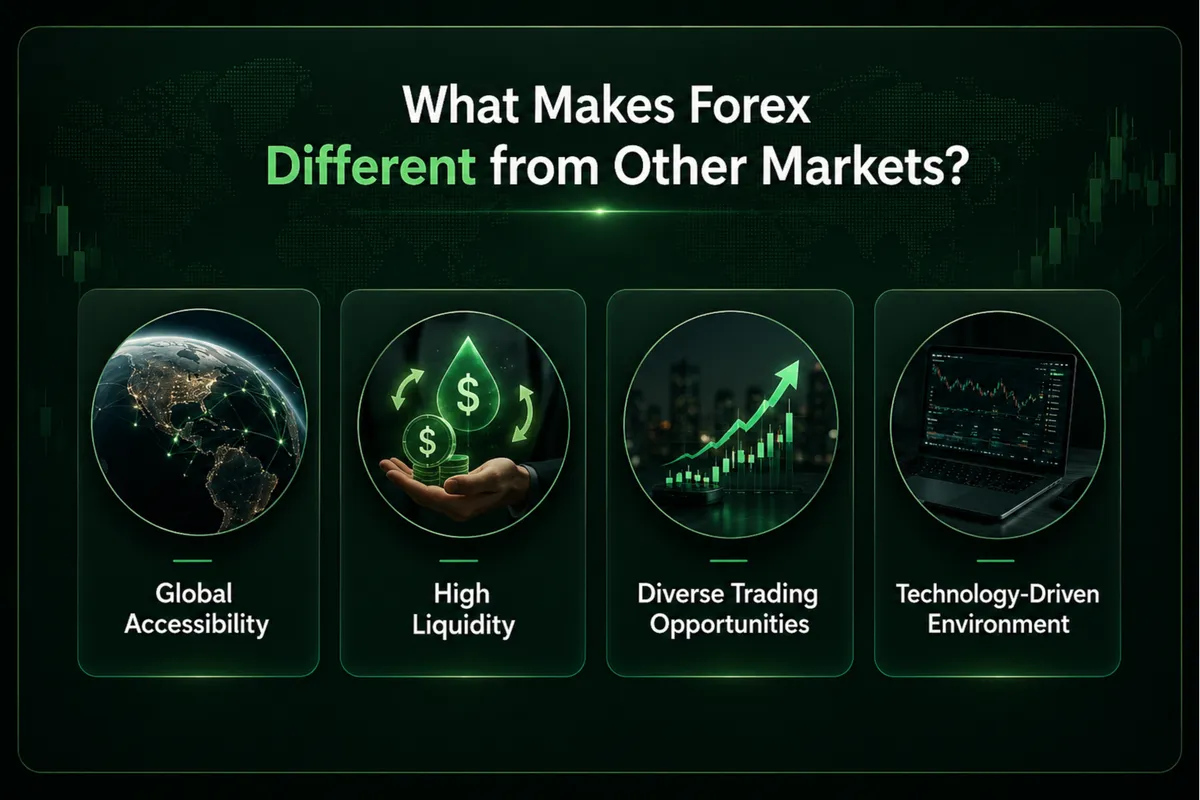
Global Accessibility
Participants from many countries can access the market through regulated trading platforms.
High Liquidity
Because of the large number of participants and significant trading volume, major currency pairs are generally highly liquid.
This often allows traders to enter and exit positions efficiently under normal market conditions.
Diverse Trading Opportunities
Price movements occur throughout the trading week as economies release data, businesses exchange currencies, and global events influence market sentiment.
Technology-Driven Environment
Modern trading platforms provide access to:
Real-time market data
Technical analysis tools
Economic calendars
Trading alerts
Mobile trading applications
Automated trading technologies
Technology has made the Forex market more accessible than ever before, while also emphasizing the importance of education and responsible decision-making.
Is Forex Trading Risk-Free?
No.
Like any financial market, Forex trading involves risk.
Currency prices can move unpredictably, and market conditions can change rapidly.
This is why experienced traders often place significant emphasis on:
Risk management
Position sizing
Trading plans
Emotional discipline
Continuous learning
Understanding these concepts is just as important as learning how to read charts.
Common Misconceptions About Forex Trading
"Forex is a guaranteed way to make money."
No financial market can guarantee profits. Successful trading requires education, discipline, and effective risk management.
"You need to be an economics expert."
While understanding economics can be helpful, many beginners start by learning the fundamentals one step at a time.
Knowledge develops through continuous education and practical experience.
"Professional traders never lose."
Losses are a normal part of trading.
What often distinguishes experienced traders is how they manage risk and respond to losses rather than trying to avoid them entirely.
Tips for Beginners Entering the Forex Market
If you're considering learning Forex trading, here are several practical steps to help you build a strong foundation:
Learn the basic terminology before placing trades.
Understand how currency pairs work.
Study both technical and fundamental analysis.
Develop a written trading plan.
Practice with a demo account before using real capital.
Learn proper risk management techniques.
Keep a trading journal to review decisions.
Continue learning through structured educational resources.
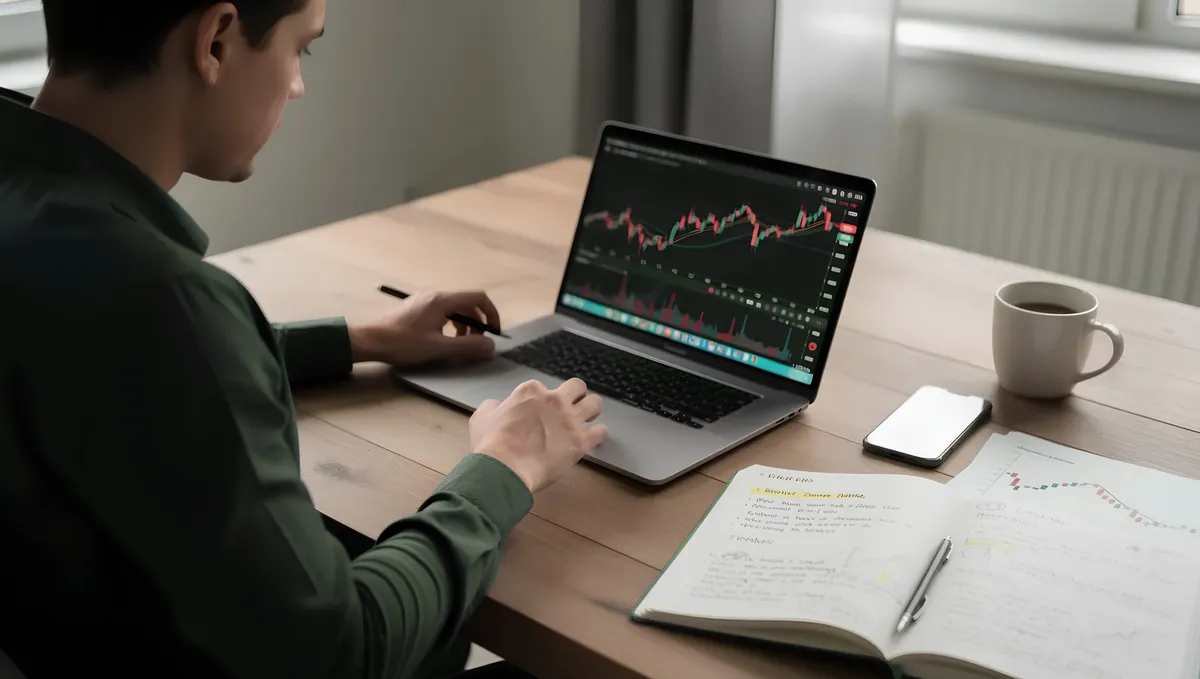
Trading is a skill developed over time, not overnight.
Frequently Asked Questions
Is Forex trading legal?
The legality of Forex trading depends on the regulations in your country and the broker you choose. Always ensure you understand the applicable laws and work with properly regulated providers where available.
How much money do I need to start?
The amount varies depending on your goals, trading style, and the requirements of your chosen broker. Beginners should only use capital they can afford to risk.
Can beginners learn Forex?
Yes. Many successful traders started with no prior experience. Building knowledge, practicing consistently, and managing risk responsibly are key parts of the learning process.
Can I trade using my phone?
Many trading platforms offer mobile applications that allow users to monitor markets, analyze charts, and manage trades while away from their computers.
Final Thoughts
Forex trading is one of the most dynamic financial markets in the world, offering participants the opportunity to engage with global currency movements.
However, success in Forex is not about predicting every market move or finding shortcuts. It comes from understanding how the market works, developing a structured approach, managing risk responsibly, and committing to continuous learning.
If you're just beginning your journey, focus on building a solid foundation before chasing results. Learn the language of the market, understand the factors that influence currency prices, and practice disciplined decision-making.
The goal isn't simply to trade more—it's to trade with greater knowledge, preparation, and consistency.
As you continue learning, you'll be better equipped to explore topics such as currency pairs, market analysis, trading psychology, and risk management, all of which play an important role in becoming a more informed trader.
Continue Your Learning Journey
Next Article: How Does the Forex Market Work? Understanding Currency Pairs and Exchange Rates
Related Articles:
Why Most Beginner Forex Traders Lose Money (And How to Avoid Their Mistakes)
Common Forex Terms Every New Trader Should Know
Forex Trading vs. Stock Trading: Which One Is Right for You?
What Is Risk Management in Forex Trading?